Playing Out from the Back for Amateur Teams
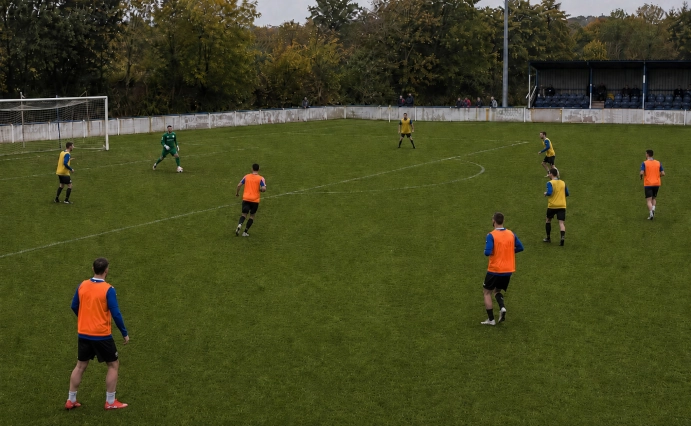
Playing out from the back does not mean taking unnecessary risks near your own goal. For adult amateur football teams, it means choosing the safest and most useful way to start an attack from the goalkeeper, defenders, and defensive midfielder.
Sometimes the best option is a short pass into a centre-back or fullback. Sometimes the right decision is to go long into a target player or wide channel. The important thing is not whether the pass is short or long. The important thing is whether the decision helps your team keep control, escape pressure, and move up the pitch safely.
This guide explains how to play out from the back in a practical way, without copying professional patterns that may not suit your players, pitch, or training time.
What It Means
Playing out from the back means starting possession from deep areas instead of immediately kicking the ball forward. This usually happens when the goalkeeper has the ball from a goal kick, catches the ball in open play, receives a back pass, or when a defender wins possession near your own penalty area.
The aim is to move the ball forward with control. That does not always mean passing short. A good build-up can include a pass into a centre-back, a fullback receiving in space, the defensive midfielder dropping to support, a switch across the back line, or a longer pass into a striker or wide channel.
The best teams are not the teams that always pass short. They are the teams that recognise pressure and choose the right option. For amateur teams, that distinction matters. Playing out from the back should make your team calmer and more organised, not expose you to unnecessary mistakes near your own goal.
Why Amateur Teams Struggle
Amateur teams often struggle with playing out from the back because their conditions are different from professional football. Training time is limited, pitches may be uneven or wet, and the technical level across the squad is usually mixed.
The biggest problem is usually not the idea of building from the back. The problem is forcing the idea when the situation is not right. A goalkeeper plays short because the team has been told to play short. A centre-back receives square, facing their own goal. A fullback stands too high and cannot be reached. A defensive midfielder hides behind an opponent instead of moving into a passing lane.
When this happens, playing out from the back becomes risky because the team is copying the shape without understanding the decision. The build-up needs to be based on clear roles, good body shape, early scanning, and the confidence to go long when the short pass is not safe.
The main rule is simple:
Play short when the option is safe. Go long when the risk is too high.
Safe First, Short When Possible
A short pass near your own goal is only useful if the receiver has a realistic chance to keep the ball. A technically good pass can still be a bad decision if the teammate receiving it is trapped, facing the wrong way, or has no next option.
Before playing short, the goalkeeper or defender should ask three quick questions:
- Can the receiver see the pitch?
- Does the receiver have enough time to control the ball?
- Is there a clear next pass available?
If the answer is no, the short pass is probably not worth the risk.
This rule is more useful than a fixed build-up pattern. Your players need decisions that work on real pitches, against real pressure, and with limited rehearsal. The goal is not to look patient for the sake of it. The goal is to move the ball into a better area without giving the opposition an easy chance to score.
When to Play Short
Playing short works best when your team has time, space, and clear passing angles. If the opposition is not pressing high, your centre-backs can split, your fullbacks can offer width, and your defensive midfielder can show between or beside the first line of pressure.
The first short pass should help the receiver play forward or switch the ball away from pressure. For example, if the goalkeeper plays to a centre-back, that centre-back should ideally receive side-on, see the fullback, and have the option to play inside or back across the pitch. If the centre-back receives facing only the goalkeeper, the next action becomes predictable and the opposition can press aggressively.
Body shape is crucial. Players should check their shoulder before the ball arrives, open their body to see more of the pitch, and avoid receiving flat. A player who receives side-on can usually play forward, switch, or return the ball safely. A player who receives square often has only one option and can quickly become trapped.
Short build-up is also easier when the first pass is not rushed. The goalkeeper should scan before releasing the ball and should not pass short just because a defender is asking for it. If the defender is under pressure or cannot see the pitch, the goalkeeper should delay, reset, switch the angle, or look longer.
A useful follow-up practice is the Back Four Exit drill, which helps defenders work on passing angles, body shape, and safe exits under pressure.
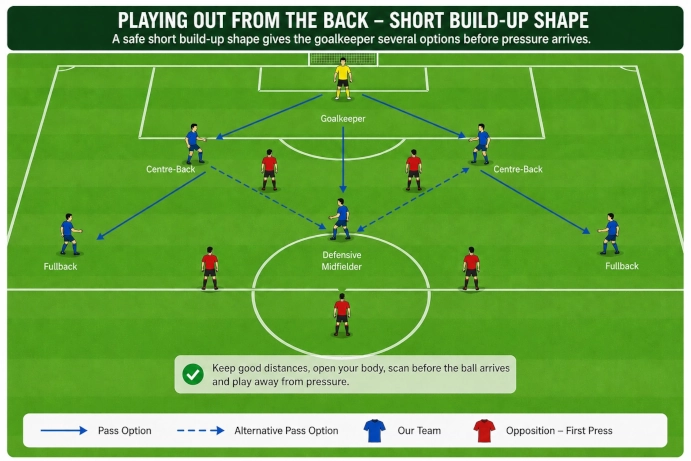
A safe short build-up shape gives the goalkeeper several options before pressure arrives.
When to Go Long
Going long is not a failure. It is often the smartest decision.
Teams can create a lot of their own problems by trying to play short when the opposition has already blocked the safe options. If both centre-backs are marked, the defensive midfielder is covered, and the goalkeeper is being rushed, forcing a short pass is usually a poor risk.
A good long pass should still be planned. The goalkeeper might play into a wide channel for a winger to chase, into a striker who can hold the ball up, or into an area where your team is ready to compete for the second ball. The difference between a good long pass and a panic clearance is that the team knows where the ball is going and moves together after it.
This is especially important on difficult pitches. If the surface is wet, uneven, or slow, a short pass into pressure near your own box becomes more dangerous. In those moments, the safer decision is often to play longer, push the team up, and reset the shape.
For more detail on choosing short and long options, read these goalkeeper distribution tips.
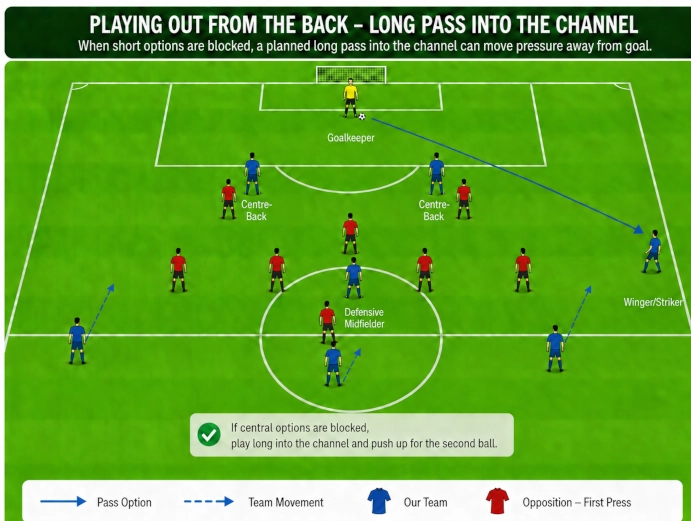
When short options are blocked, a planned long pass into the channel can move pressure away from goal.
Goalkeeper Role
The goalkeeper sets the tempo of the build-up. They do not need to play like a professional sweeper-keeper, but they do need to make clear decisions and communicate early.
Before releasing the ball, the goalkeeper should scan the pitch and check whether the short option is actually safe. A centre-back may look free, but if they are facing their own goal with a striker close behind them, the pass can still create danger. The goalkeeper has the best view of the pitch and should use that view to guide the decision.
The goalkeeper can also act as a spare player when the team recycles possession. If the centre-backs are under pressure, a pass back to the goalkeeper can help switch the ball to the other side. This only works if the goalkeeper is ready, calm, and prepared to play first time when needed.
The most important message for goalkeepers is this: do not feel forced to play short every time. If the short pass is unsafe, play longer into a planned area and let the team move up together.
A good linked practice is Goalkeeping Drill: Stop and Distribute, which helps goalkeepers practise saving, scanning, and distributing quickly.
Centre-Backs and Fullbacks
Centre-backs need to help the goalkeeper before the pass is played. That usually means splitting wide enough to stretch the first line of pressure, opening their body to see the pitch, and moving early rather than waiting for the ball.
A centre-back who stands still is easy to press. A centre-back who moves early can create a better angle for the goalkeeper and a better next pass for the team. The aim is not just to receive the ball. The aim is to receive in a position where the team can progress.
Fullbacks are just as important because they stretch the pitch and give the back line a wide outlet. If fullbacks stand too narrow, the opposition can press centrally and block several options at once. If they stand too high, the goalkeeper and centre-backs may not be able to reach them safely.
A good fullback position depends on pressure. When the goalkeeper needs a safe outlet, the fullback may need to drop slightly and stay wide. When the centre-back has time, the fullback can be higher and ready to receive forward. The key is to stay connected to the ball rather than standing in a fixed position.
The relationship between centre-back and fullback should be simple. If the centre-back receives under pressure, the fullback should offer a safe passing angle. If the fullback receives near the touchline, the centre-back should be available for a return pass. This gives the team a way to escape pressure without forcing the ball forward.
Midfielder Support
The defensive midfielder links the back line to the rest of the team. In build-up play, this player does not always need to receive the ball. Sometimes their movement is valuable because it pulls an opponent away and creates space for a centre-back, fullback, or goalkeeper to play elsewhere.
The worst position for the defensive midfielder is directly behind an opponent, asking for a pass that cannot be played. To help the build-up, they need to move side-to-side, show at an angle, and receive side-on when possible. If they can see the pitch before the ball arrives, they have a much better chance of playing forward or keeping possession.
The defensive midfielder should also understand when not to demand the ball. If they are tightly marked, it may be better to drag their marker away and open the passing lane to a fullback or striker. Good build-up play is not only about the player on the ball. It is also about the movement around the ball.
For more on scanning and decision-making, see tactical awareness in football.
Three Build-Up Options
Amateur teams do not need dozens of build-up patterns. It is better to have a few simple options that players understand and can repeat under pressure.
Centre-Back to Fullback
This option works when the opposition is not pressing aggressively and the fullback is free. The goalkeeper plays to the centre-back, the centre-back receives side-on, and the fullback stays wide enough to receive away from pressure.
The key detail is the centre-back’s first touch and body shape. If the centre-back receives facing forward or slightly side-on, they can play into the fullback, defensive midfielder, or back across the pitch. If they receive square and slow, the opposition has time to close the space.
The fullback must also be reachable. If they are too high, the pass becomes risky. If they are too narrow, they bring pressure into the centre of the pitch. A simple wide position gives the team a safer exit.
Switch the Play
This option works when the opposition presses one side of the pitch. The team attracts pressure, recycles the ball back or across, and then moves forward on the less crowded side.
The switch does not need to be spectacular. It can be goalkeeper to centre-back, centre-back back to goalkeeper, then goalkeeper to the opposite centre-back or fullback. What matters is the timing. If the switch is too slow, the opposition can slide across and press again. If it is played at the right moment, the far-side player receives with more time.
This idea connects closely with team shape and formation. For more context, read about football formations for amateur teams.
Long Into the Channel
This option works when the short passes are blocked. Instead of forcing the ball into a marked centre-back or midfielder, the goalkeeper or defender plays into a wide channel for a winger or striker to chase.
The long ball should have a target area. It should not be a random clearance down the middle. A wide channel is often safer because even if your team does not win the first ball, the opposition receives farther from goal and closer to the touchline.
The rest of the team must react together. If the goalkeeper goes long and the back line stays deep, the striker becomes isolated. If the team pushes up together, you can compete for the second ball and continue the attack from a safer area.
Do Not Overplay
The biggest mistake teams make is treating playing out from the back as a style requirement instead of a decision. There is no benefit in making three short passes near your own goal if the third pass gives the ball away under pressure.
A good build-up should make the next action easier. If every pass makes the receiver more trapped, the team is not building. It is inviting pressure.
This is where communication matters. The goalkeeper should be comfortable telling defenders to move wider, drop lower, or clear the area. Centre-backs should tell the goalkeeper when they have time or when they are under pressure. Midfielders should show clearly rather than standing behind opponents and asking for impossible passes.
A simple team rule can help:
If the short pass does not give the receiver time, space, and a next option, do not play it.
That rule keeps the team focused on safety and decision-making, not style.
Common Mistakes
Most build-up mistakes are simple and repeatable. Once players recognise them, they are easier to fix.
Watch for:
- Forcing short passes under pressure.
- Passing to a player who cannot see the pitch.
- Centre-backs standing flat.
- Fullbacks being too narrow or too high.
- The defensive midfielder hiding behind an opponent.
- The goalkeeper taking too long to decide.
- No communication before the ball is played.
- Trying to copy professional patterns without enough practice.
- Ignoring the safe long option.
A useful question for players is:
“What is the safest next pass?”
That question keeps the focus on decision-making rather than looking good in possession.
How to Train It
You do not need to turn every session into a complex tactical practice. Teams can improve build-up play by training a few repeatable habits: goalkeeper scanning, centre-back angles, fullback width, defensive midfielder movement, and the decision to play short or long.
The easiest way to start is to use existing drills that already create pressure and force decisions. The Back Four Exit drill is useful for defenders because it trains the back line to find safe exits into midfield or wide areas. The Goalkeeping Drill: Stop and Distribute is useful for goalkeepers because it links shot-stopping with quick distribution decisions.
You can also add build-up rules into small-sided games. For example, start each attack with the goalkeeper and ask the team to recognise whether the short pass is safe or whether the long option is better. Keep the coaching focus simple. Do not stop every mistake. Look for better body shape, earlier movement, and clearer communication.
The aim is not to memorise a perfect pattern. The aim is to help players recognise the situation earlier and make a safer decision.
Video Example
A useful video to study is Building The Attack by FA Learning. It shows how a team can use the goalkeeper, defenders, and midfielders to build from deep areas and progress the ball forward.
As you watch, focus on the same ideas from this article:
- How the goalkeeper is used as part of the build-up.
- How defenders create angles before receiving.
- How midfielders drop or move to support the ball.
- How the team avoids forcing passes into pressure.
- How the build-up creates a better forward option.
Do not copy the session exactly unless it suits your players. Instead, use the video to reinforce the main principles: create passing angles early, receive with an open body, support the player on the ball, and play away from pressure when the short option is not safe.
After watching, ask your players one simple question:
“When the goalkeeper has the ball, what is our safest first option?”
Key Takeaways
- Playing out from the back is about good decisions, not always passing short.
- Play short when the receiver has time, space, and a clear next pass.
- Go long when the short options are blocked or too risky.
- Body shape, scanning, and communication matter more than complicated patterns.
- A planned long pass is better than a forced short pass near your own goal.
Try This Next Session
In your next training session, give your goalkeeper and defenders one simple rule:
Play short only when the receiver has time, space, and a clear next pass.
If those three things are missing, go long into a planned area and reset the team shape.
To train this properly, try the Back Four Exit drill or the Goalkeeping Drill: Stop and Distribute. Both are useful follow-up practices for teams that want to improve their build-up play without taking unnecessary risks.
Related Posts
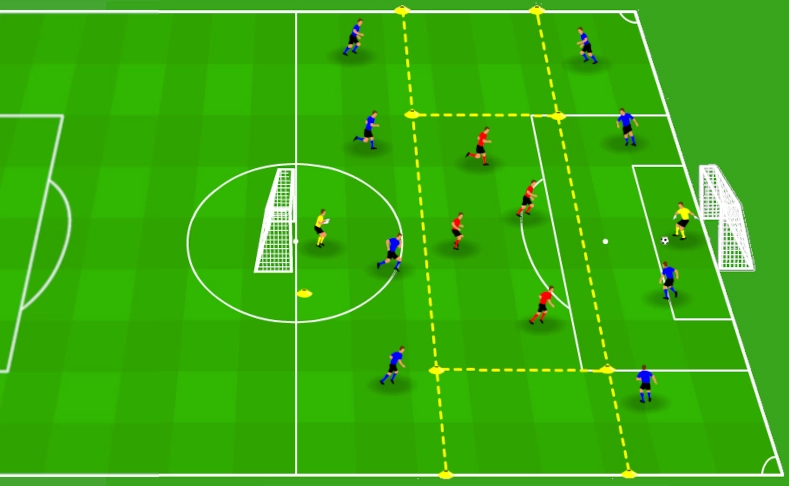
Back Four Exit - Defenders vs Midfield and Attack
A Back Four Exit drill for adult amateur teams, training build-up play, pressing, switching play, transitions, and finishing in a zoned half-pitch setup.
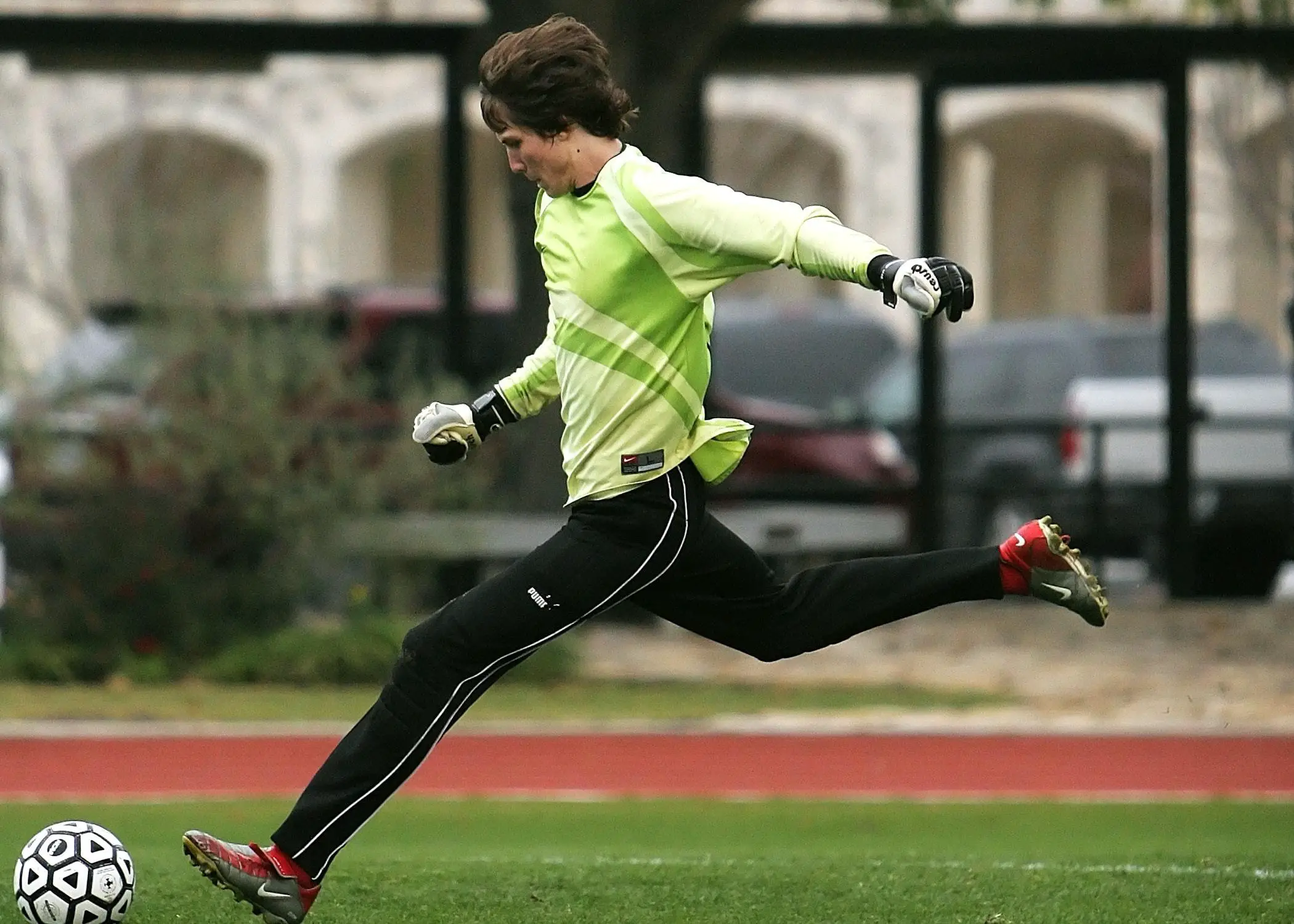
Goalkeeper distribution tips
Once the keeper has the ball, they become a field player. This post illustrates goalkeeper distribution techniques and when to use them.
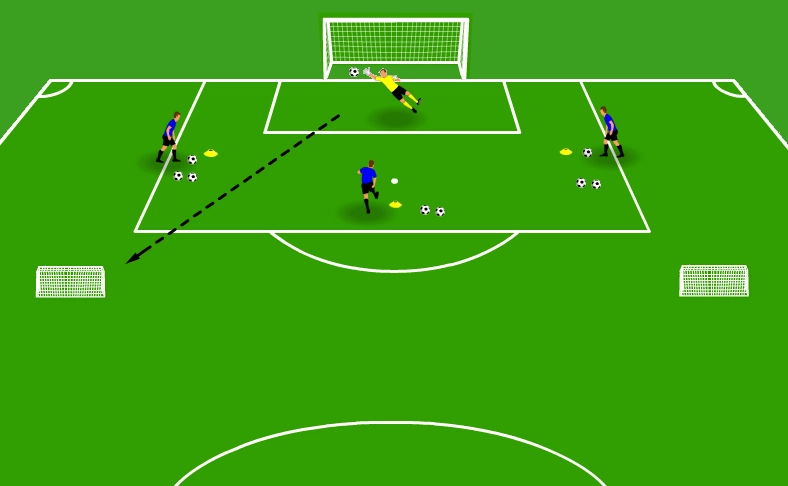
Goalkeeping drill: Stop and Distribute
This goalkeeping drill helps keepers practise stopping shots, recovering quickly, and distributing accurately into target goals.